



Ha Giang Loop riding hours per day
How many hours do you ride each day on a 3-day Ha Giang Loop? Compare 3D2N routes, saddle time, photo stops, breaks and Easy Rider comfort tips.
Ha Giang Loop 3 Days: How Many Hours Do You Ride Each Day?
A realistic guide to daily riding hours, overnight route choices, photo stops, passenger comfort and the difference between time on the bike and the full touring day.
How many hours do you ride each day on a 3-day Ha Giang Loop? Expect roughly 4–6 hours of actual motorcycle movement on many days, with shorter or longer days depending on the overnight towns, detours, roadworks and the weather. If your route includes a long return from Meo Vac on day three, you could be moving for 5½–7 hours before adding meals and sightseeing. These are planning ranges, not fixed departure-to-arrival promises.
For first-time visitors, this distinction matters. A tour that advertises “five hours riding” can still mean leaving after breakfast and reaching your homestay in the late afternoon. You might stop for coffee overlooking the mountains, take photos at Tham Ma Pass, have lunch in a small town and spend time at Ma Pi Leng. All of that is part of the holiday, but it is not time spent moving.
This practical guide compares seat time, total day length, two common three-day routes, Easy Rider comfort and the questions worth asking before booking with Vietnam Booker Office. It is written for people who love scenery but want to know how demanding the motorbike journey actually feels.

How many riding hours per day?
Figures are illustrative ranges synthesized from published operator itineraries, not official speed standards. Extreme delays may exceed them. Always verify your chosen operator's day-by-day route.
1. Ha Giang Loop 3 days: daily riding hours at a glance
There is no single standardized three-day Ha Giang Loop itinerary. The table below shows a scenic Du Gia variation, followed by the common alternative where night two is spent in Meo Vac and the final day is longer. Distances and timings are rounded, with rest stops excluded from the riding column.
| Day / sample route | Approx. distance | Moving time | Typical touring-day window |
|---|---|---|---|
| Day 1 Ha Giang → Quan Ba → Yen Minh → Dong Van |
140–160 km | 5–6 hours | 7–9 hours with stops |
| Day 2 Dong Van → Ma Pi Leng → Meo Vac → Du Gia |
90–110 km | 4–5½ hours | 7–10 hours, especially with detours |
| Day 3 Du Gia → Ha Giang |
90–110 km | 3–4½ hours | 5–7 hours with breaks |
| Alternate Day 3 Meo Vac → return via a longer mountain route → Ha Giang |
140–160 km (route-dependent) | 5½–7 hours | 8–10+ hours with stops |
The largest variables are the second overnight location and whether a sightseeing detour is actually included. Some three-day itineraries prioritize Dong Van and Meo Vac, skipping Du Gia. Others ride through Du Gia on the second day to keep the last day gentler. A few reverse the loop completely. Do not compare two tours using only their total kilometres.
2. Riding hours vs the full touring day: why they feel different
Imagine that your group leaves a Ha Giang homestay at 8:30 a.m. and reaches the evening accommodation at 5:00 p.m. That is an 8½-hour day, but you probably did not sit on a moving motorcycle for all 8½ hours. You might spend five hours riding, an hour over lunch, an hour visiting viewpoints and another hour and a half split between coffee, fuel, bathrooms and waiting for a group to regroup.
In the mountains, slow speed is often sensible rather than inefficient. A winding 30-kilometre section can take far longer than an equally long flat highway. There are sharp bends, changing elevations, village traffic, sections where a driver should avoid overtaking and photo viewpoints where parking carefully takes time. The Ha Giang Loop is about the journey rather than arriving as fast as possible.
Three separate questions help you interpret an itinerary:
- Moving time: How many hours will the motorcycle be travelling?
- Seated time: How many hours will I be on the bike, including traffic and short pauses without getting off?
- Touring time: From leaving breakfast to entering the next homestay, including visits and meals?
These figures are not interchangeable. Travelers worried about back discomfort or fatigue should ask for moving time and the longest continuous section between proper breaks, not only the start and finish times.

3. Day 1: Ha Giang City to Dong Van – usually a substantial riding day
For a classic northbound itinerary, day one starts in the town commonly called Ha Giang City. The road climbs toward Bac Sum and Quan Ba, continues through Yen Minh and reaches Dong Van by late afternoon. Depending on the exact route, approximately 140–160 kilometres and five to six hours of moving time make a reasonable planning example.
What happens along the way?
The early climb is where new passengers discover that the Loop is not comparable to an ordinary city motorbike ride. The guide navigates the bends while you watch terraces, limestone slopes and the changing mountain skyline. Around Quan Ba, many groups stop at Heaven Gate and the Twin Mountains viewpoint. Lunch may be in Yen Minh or another town, depending on pace.
Later, the road toward Dong Van offers highland villages and striking curves, including Tham Ma Pass. Some tour schedules also fit in the Vuong family residence in Sa Phin. Each attraction takes time, and what appears to be a “quick photo stop” can easily become a 20-minute visit once everyone parks, walks to a viewpoint and meets again.
Plan for a full travel day even though the ride hours are lower than the clock time. The best outcome is reaching Dong Van with enough daylight to settle into the homestay, shower, eat dinner and walk through the town if you still have energy.
Could the first night be in Yen Minh instead?
Yes. Some operators intentionally end their first day in Yen Minh, shortening that day's ride and spreading the plateau stops across later days. That can be more comfortable on day one but makes the rest of the itinerary different. Ask the operator for the actual night-one town rather than assuming every 3D2N tour sleeps in Dong Van.

4. Day 2: Dong Van, Ma Pi Leng Pass and the most memorable stops
Many travelers consider this the scenic highlight: Dong Van, the high cliffs of Ma Pi Leng, the turquoise Nho Que River far below and the approach toward Meo Vac. The core road between Dong Van and Meo Vac is relatively short in kilometres, but visiting the viewpoints properly takes time. An itinerary extending onward to Du Gia might involve about four to five and a half hours of moving time, sometimes more if the day is redirected.
Ma Pi Leng is not a place to rush. The road has sharp bends, cliffside views and regular opportunities to stop. A professional Easy Rider should prioritize finding a safe parking area rather than stopping impulsively in a blind corner. Weather also matters: a photograph from a sunny day does not tell you how a misty morning will look.
Is the Nho Que River boat trip included?
Not automatically. Some packages include a boat experience while others offer it as an optional activity; a few have no time for it on a tight 3-day schedule. You must account for the descent to the landing point, walking or local transfers where applicable, queues, the boat itself and the climb back to the main route. As a practical allowance, it can absorb roughly two or more additional hours in the touring schedule.
If the operator aims to reach Du Gia on night two, combining the boat with every viewpoint and a relaxed lunch may make this a very long day. Discuss which stop takes priority and whether the driver can skip a detour if rain, fog or slow traffic pushes the schedule back. A flexible itinerary can be a sign of good planning, not a disappointing service.
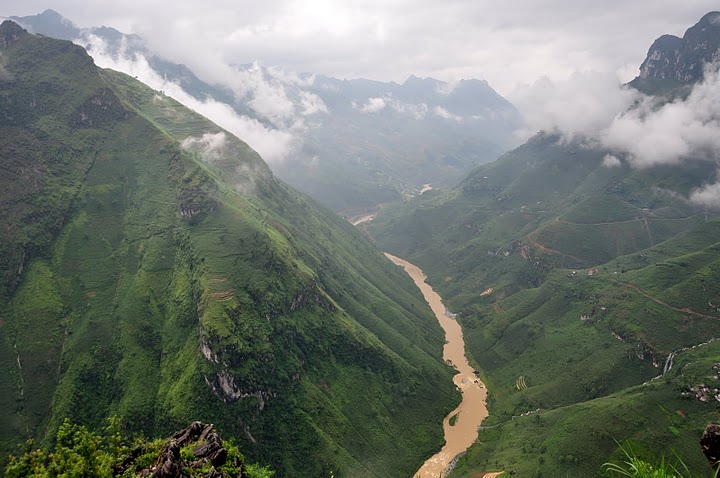
5. Day 3: Back to Ha Giang – easy finish or the longest ride?
Day three is the biggest source of confusion in “How long will I ride?” searches. Two tours both labelled Ha Giang Loop 3 days 2 nights can feel completely different because they spent the second night in different places.
If night two is in Du Gia
Returning from Du Gia to Ha Giang generally makes for a shorter final riding day than leaving directly from Meo Vac. A broad route example is 90–110 kilometres and three to four and a half hours moving, before village visits, lunch and breaks. This is attractive to travelers planning an onward bus in the evening, although no return time should be treated as guaranteed.
A relaxed morning may allow a short village walk or photo stop, but don't plan swimming, a waterfall visit or extra detours without checking the route and local conditions. The priority is to return safely rather than squeeze in every possible activity.
If night two is in Meo Vac
Day three can be the toughest: a more direct or alternative return may run to roughly 140–160 kilometres and five and a half to seven hours of movement, subject to which mountain roads are chosen. With lunch and scenic pauses, this can turn into an eight-to-ten-hour travel day or longer. Some operators take the return via Yen Minh and Quan Ba, while others use a different road. The distance is not identical.
If your group also intends to visit Du Gia from Meo Vac before returning to Ha Giang, make sure the schedule is realistic. The extra winding sections can transform what looks like a short day on a map into a major endurance day. Tour descriptions that merely say “back to Ha Giang after breakfast” do not provide enough information for an informed booking.
When arranging an overnight bus or onward flight, build in flexibility. Weather, road maintenance, landslides, delays at lunch and fatigue can all disrupt the expected finish time. Avoid a tight same-day flight connection.

6. Why the second overnight stop changes your entire trip
There are several ways to fit the highlights into three days. One version visits Dong Van, Ma Pi Leng and Meo Vac, then returns without spending the night in Du Gia. Another travels on toward Du Gia on day two, so day three has fewer riding hours. A reverse-direction loop is also possible. The marketing title does not tell you which pattern you are getting.
| Three-day route style | Main advantage | Trade-off | Best for |
|---|---|---|---|
| Dong Van + Meo Vac overnight | More time around the northern plateau on day two | Potentially longer, more tiring final return | Travelers who prioritize plateau sights |
| Dong Van + Du Gia overnight | Shorter final leg from Du Gia | Day two may be demanding if river and village detours are added | Travelers who like village scenery and a gentler finish |
| Yen Minh + Meo Vac overnight | Shorter first day from Ha Giang | Longer combined plateau sightseeing later | Groups wanting a softer introduction |
| Reverse loop via Du Gia first | Different distribution of climbs and viewpoints | Ride hours cannot be compared directly with a clockwise table | Those following a particular operator's route |
Ask for the full route, the two overnight towns and the day-three return road. Those three pieces of information are more useful than an unqualified claim such as “five hours a day”. A genuinely helpful tour quotation should show the long days honestly.
7. How much extra time do viewpoints, meals and attractions add?
A good Easy Rider itinerary is not a continuous race around the plateau. Much of the pleasure comes from getting off the bike, stretching and talking with your guide. At the same time, too many stops can cause the last hour to feel rushed, especially when the group still needs to reach accommodation before nightfall.
| Stop type | Planning allowance | What changes the timing? |
|---|---|---|
| Scenic viewpoint or photo stop | 10–25 minutes | Parking, walking distance, group size and visibility |
| Coffee / restroom break | 10–20 minutes | Number of riders and availability of facilities |
| Lunch break | 40–75 minutes | Meal service and how many people are being served |
| Village or heritage site visit | 30–75 minutes | Entry arrangements, guided explanation and walking |
| Nho Que River boat detour | Allow around 2+ extra hours | Road access, transfers, queues and boat schedule |
| Lung Cu detour from Dong Van area | Allow around 2–3+ extra hours | Return ride, viewpoint access and weather |
These are planning allowances, not published official attraction durations. A professional guide may combine stops differently. If the weather is poor or the group needs more rest, the operator may remove an optional activity to avoid riding too late. This should be explained before departure whenever possible.

8. Is five hours on the back of an Easy Rider exhausting?
For most healthy adults, several hours as a motorcycle passenger are manageable with appropriate breaks, but comfort varies significantly. You still experience the bike's vibrations, braking, turns, cold wind and the effort of maintaining a stable seated position. You are not controlling the motorcycle, yet your body is not resting as it would in a car seat.
How Easy Rider differs from self-driving
With an Easy Rider, a local driver handles navigation, gears, traffic, road positioning and the mountain bends. This reduces the concentration burden for the passenger. If you are not qualified or experienced to ride a motorbike on steep roads, being a passenger with an appropriately licensed and experienced driver is a more sensible option than attempting to learn on the Loop.
However, Easy Rider is not risk-free. Safety depends on the driver, motorcycle condition, protective equipment, weather, speed, group behaviour and the route. Do not accept promises that a tour is completely safe simply because it is guided.
Practical ways to stay comfortable
- Wear a well-fitting, quality helmet. Ask about the helmet type and whether a proper chin strap and visor are provided.
- Dress in layers. Even warm valley afternoons can lead to chilly high-altitude passes, especially when moving.
- Use secure shoes. Avoid open sandals or footwear that can slip off; protect ankles where possible.
- Keep your essentials in a small daypack. Ask where the main luggage will be stored and how it is secured.
- Request regular stops. Tell your driver early about numbness, knee stiffness, motion sickness or feeling cold.
- Hydrate and eat. Skipping food to save time can make a long riding day feel much harder.
- Take turns calmly. Stay seated, keep feet on the footrests and follow your driver’s passenger instructions.
For people with significant back or neck problems, pregnancy-related mobility concerns or other medical limitations, consider a private car option or consult a qualified clinician before selecting a multi-day motorcycle tour. The scenery is worth seeing, but the mode of transport should suit the person.
9. How weather, roadworks and season change riding hours
Published ride times are useful only under comparable conditions. Mountain weather can change quickly. Fog can reduce visibility, heavy rain can make slopes slippery and roadworks may slow or close sections. On these roads, a careful guide may reduce speed or stop altogether rather than preserve the planned timetable.
December to February: High-altitude areas can be cold, with fog and occasionally very poor visibility. Bring warm layers and gloves suitable for riding. Do not assume that clear skies in Ha Giang town mean the plateau will be clear.
Rainier months: Rain and landslide risk can affect access and the amount of time spent on narrow sections. A planned scenic detour may be unsafe or impractical after prolonged rainfall. Road repair work can also add unexpected delays in any season.
Busy periods: Groups may take longer to regroup at popular viewpoints or restaurants. Travel time can increase when sections have heavier traffic, festivals or large numbers of visitors. There is no benefit in trying to recover lost minutes with aggressive riding.

10. Ha Giang Loop 3 days vs 4 days: is the extra day worth it?
Three days is enough for a memorable introduction to the region if you accept a fairly active pace. Four days often offers a noticeably more relaxed rhythm: extra time in Du Gia, a less compressed Ma Pi Leng visit, longer village stops or a better buffer for poor weather. It may also spread your hours on the bike more evenly, although that depends on the itinerary.
| Question | 3D2N | 4D3N |
|---|---|---|
| Best for | Short Vietnam itineraries | Travelers with time for slower exploration |
| Daily pace | Often 4–6+ moving hours; some long return days | Often shorter or better balanced legs |
| Photo and village time | Selective, depending on route | Generally more flexibility |
| Weather buffer | Limited | More room to adjust, not a guarantee |
| Hotel / homestay nights | 2 | 3 |
If you only have three days, don't feel you need to tick every famous place off a list. The better strategy is to ask which two or three experiences matter most. Ma Pi Leng and the main plateau views may be more important to you than a distant flag tower or an optional boat ride that forces a late arrival.
For slow photographers, people who prefer frequent breaks or travelers with more flexibility, a fourth day may be worth the extra accommodation and tour time. If your priority is to see the dramatic mountain route with limited holiday days, a carefully planned 3D2N Easy Rider itinerary is still a strong choice.
11. What to ask before booking a Ha Giang Loop 3D2N Easy Rider
A reliable booking conversation should go beyond price. Before paying, ask your operator to confirm the practical details in writing and make clear which optional experiences are included. This helps you understand the real number of hours on the motorbike each day.
- Where does each day begin and end? Request the actual overnight towns, not only attraction names.
- What is the expected moving time for days one, two and three? Ask separately about the full sightseeing-day duration.
- Which route do you take back on day three? This may be the longest part of the trip.
- Is Du Gia included? If yes, is it an overnight stay or a quick stop?
- Are the Nho Que boat trip and Lung Cu included? They add time, and fees may be additional.
- How often do you stop? Tell the operator about back discomfort or motion sickness in advance.
- What is the group size? Large groups may take longer to leave viewpoints and restaurants.
- What helmets and protective equipment are provided? Check their condition and fit before departure.
- What happens with fog, rain or a road closure? Ask how detours and missed attractions are handled.
- What time are you expected back in Ha Giang? Do not book a tight onward connection based only on the best-case time.
Want an Easy Rider itinerary that fits your pace?
Tell Vietnam Booker Office your dates, how many people are travelling and whether you prefer fewer hours on the motorbike or more scenic stops. Ask for the exact 3-day route, overnight towns and current inclusions before you book.
Ask about the 3D2N Easy Rider on WhatsApp →WhatsApp: +84 989 661 264 · A quotation is provided upon request. Route and timing remain weather-dependent.
12. Frequently asked questions
How many hours a day do you ride on a 3-day Ha Giang Loop?
Many sample routes involve around four to six hours of actual motorcycle movement on a normal day. Some days are shorter; a long return from Meo Vac can reach five and a half to seven hours. Meals, viewpoints and other stops increase the full day's duration.
Does five hours riding mean five hours from breakfast to hotel?
No. Moving time excludes lunch, photo stops, fuel, attractions and regrouping. A five-hour riding day can easily fill seven to nine hours from departure to arrival.
Which day is the longest on the Ha Giang Loop?
It depends on the operator's route. Day one toward Dong Van is often substantial. If the second night is in Meo Vac, day three may be the longest. If you reach Du Gia on day two, the final return is often shorter.
Is the Ha Giang Loop tiring as an Easy Rider passenger?
Several hours on the back of a motorcycle can be tiring, especially for your knees, back or neck. An Easy Rider handles the driving, but passengers still need appropriate gear and comfortable breaks.
Is Du Gia always included in a 3-day Ha Giang Loop?
No. Some 3D2N tours include an overnight stay in Du Gia; others prioritize Dong Van and Meo Vac and skip it. Ask for the two overnight locations and day-three road.
Does the Nho Que River boat ride add much time?
Yes. It involves more than time on the boat. Transfers, access to the landing, waiting and returning to the main route can consume around two or more additional hours, depending on conditions.
Do I need a motorcycle licence to ride behind an Easy Rider?
Passengers normally do not operate the motorcycle and do not need a motorbike licence just to sit behind the driver. Self-driving has different licence and insurance requirements; verify current Vietnamese rules and your policy before hiring a bike.
Can weather make a three-day tour longer?
Yes. Fog, rain, roadworks, landslides and traffic can slow the route or require changes. Responsible drivers do not promise fixed ride times regardless of conditions.
Should I choose a three-day or four-day Ha Giang Loop?
Choose three days if you have limited time and are comfortable with full touring days. Four days generally permits more rest, scenery stops and flexibility. The route details matter more than the label alone.
Final verdict: plan the rhythm, not just the kilometres
The most useful answer is not a single universal number. On a three-day Ha Giang Loop, plan for multiple hours of mountain riding every day, with an itinerary that may become a full-day outing after stops. Most importantly, ask whether the second night is in Meo Vac or Du Gia; that one decision can change how demanding the final day feels.
For visitors who want to focus on the scenery rather than operate a motorcycle, an experienced Easy Rider offers a convenient way to explore. Choose a responsible operator, wear proper gear, remain flexible about weather and avoid scheduling onward travel too tightly. With the right pace, the Ha Giang Loop feels like a journey through the northern mountains rather than a race around them.
Timings are rounded editorial estimates and vary by route. See Vietnam Tourism's four-day road-trip guide, Ha Giang 23's 3-day sample itinerary, VietAdvisor's 3D2N routing examples and Ha-giang.org's route comparison. Recheck roads, transport conditions and operator inclusions before publishing or travelling.
Updated 13 November 2026. Place names in this article use the familiar travel-region term “Ha Giang Loop.” Administrative boundaries changed in 2025; the route name remains widely used.
Website publishing tool — embed 7 genuine photos for a self-contained HTML file
The seven article photographs currently link to Wikimedia Commons, which may be blocked. To make a file that works without external image hosts, choose seven original JPG, PNG or WebP photographs below. This tool runs in your browser and embeds them as JPEG data inside a new HTML download. Use only photos you own or have permission to reuse. Keep photographer and licence attribution correct when replacing Commons photos; this tool updates the credit to “Photo provided by website editor” so you should replace that text with the actual credit before publishing when necessary. The download has no generated illustrations.
DISCOVERING THE GREAT TRAVEL TO VIET NAM
Call/Zalo/WhatsApp: (+84) 989661264 (Mr Truong John)
TO BE CONSULTED AND GET THE VIET NAM TOUR WITH THE BEST
VIET NAM BOOKER OFFICE
Add: 40 Bat Dan Str, Hoan Kiem Ward, Ha noi, Viet nam
E - mail : vietnambooker.com@gmail.com
Website: www.vietnambooker.com
main.comment_read_more