


Bus vs Train in Vietnam: Which Is Better for Travelers?
Bus or train in Vietnam? Compare comfort, routes, luggage, sleeper buses, overnight trains and which transport option suits your Vietnam itinerary.
Bus vs Train in Vietnam: Which Is Better for Travelers?
When planning a multi-city trip, many travelers wonder whether bus vs train in Vietnam is the better way to get around.
Buses have the advantage of a wide network, flexible pickup and drop-off points and access to destinations without railway stations. Trains, on the other hand, can appeal to travelers who want more space, scenic views and a slower journey between cities.
However, there is no single transport option that works best for every route. Your choice should depend on the distance, destination, travel time, seat or berth type, luggage and your preferred travel style.
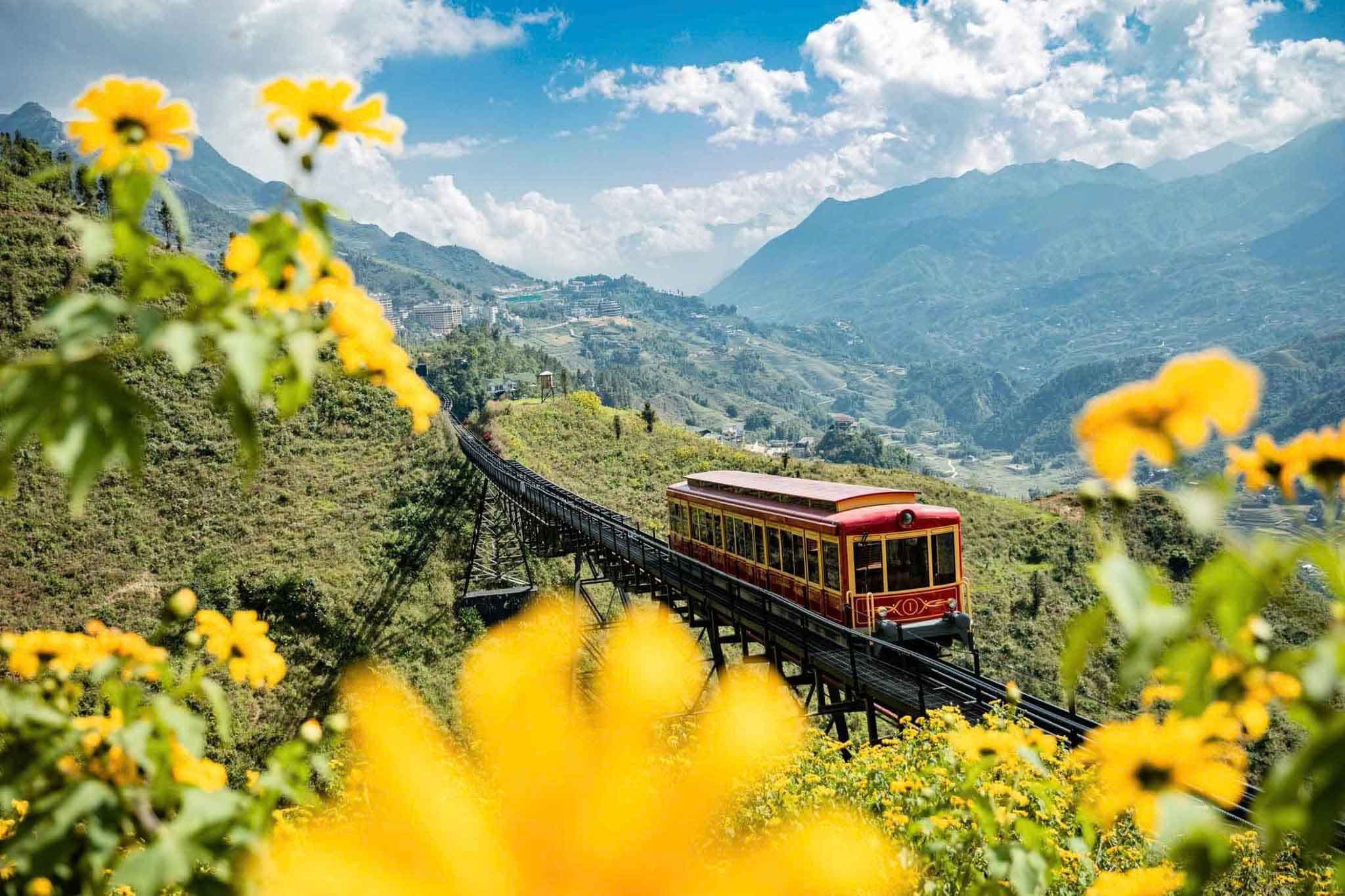
Bus vs Train in Vietnam: What Are the Main Differences?
| Factor | Bus | Train |
|---|---|---|
| Destination network | Very wide | Limited to railway routes |
| Space to move around | More limited | You can usually stand and move around the carriage |
| Scenery | Depends on the road | Some routes offer scenic views |
| Pickup and drop-off | Can be more flexible | Railway stations |
| Overnight travel | Sleeper buses operate on many routes | Seats and sleeper berths are available on some services |
| Mountain destinations | Often more practical | Many mountain destinations have no direct station |
When Should You Choose a Bus in Vietnam?
Buses are often a practical option when your destination is not on the railway network or when you want to travel directly to a tourist area without changing transport.
1. When Your Destination Does Not Have a Railway Station
This is one of the biggest advantages of traveling by bus.
Many popular destinations cannot be reached directly by passenger train, so buses or other road transport are necessary.
For example, if you are traveling to Ha Giang, you will need road transportation because Ha Giang City is not directly served by Vietnam's passenger railway network.
For Sapa, you can take a train to Lao Cai and then continue by road, or take a bus directly to the Sapa area.
2. When You Want a More Direct Journey
Some bus services can take travelers from city centers or designated pickup points to locations relatively close to their accommodation.
This can reduce the number of transfers, especially if you are traveling with a large suitcase.
3. When You Want More Departure Time Options
On popular tourist routes, there may be several bus companies operating at different times of the day.
This can provide more flexibility if your itinerary changes.
However, schedules vary by route and travel date, so always check the actual departure times before booking.
4. When You Want to Use an Overnight Sleeper Bus
Sleeper buses and cabin buses operate on many long-distance routes in Vietnam.
For some travelers, this can help them:
- Travel while sleeping.
- Save daytime for sightseeing.
- Potentially avoid paying for one hotel night if the itinerary works well.
However, how well you sleep depends on your personal comfort, the type of bus, berth location and road conditions.
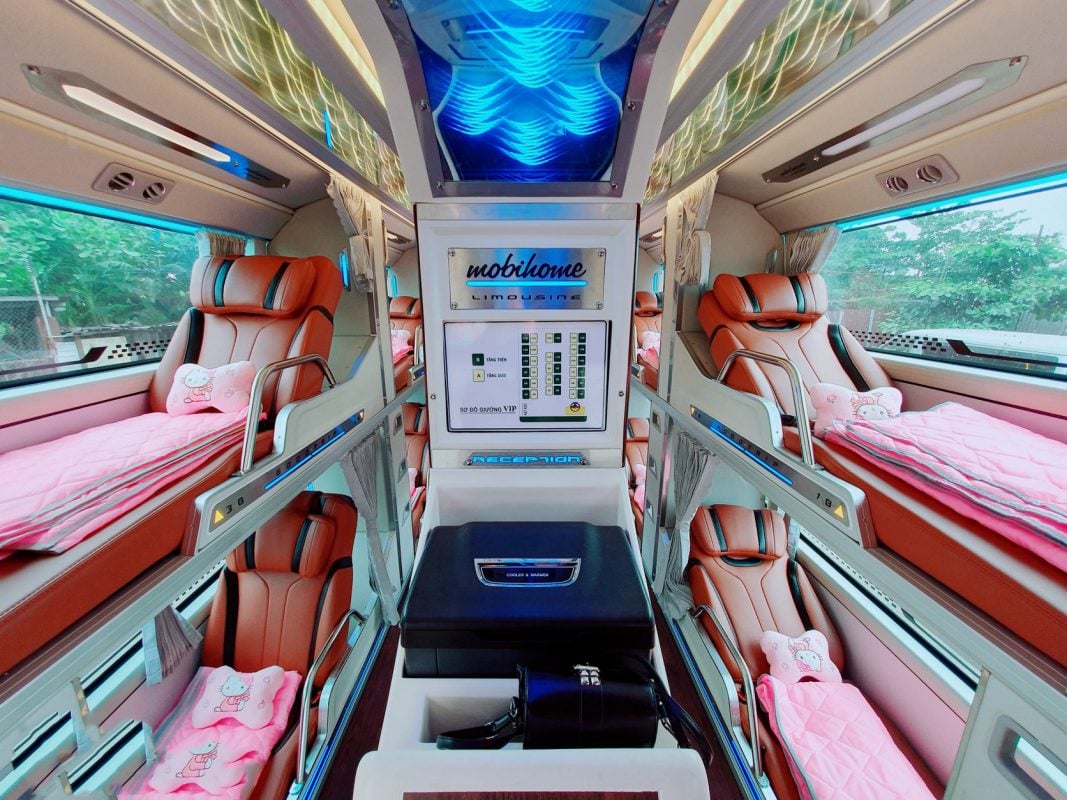
What Are the Disadvantages of Bus Travel in Vietnam?
Limited Space
During the journey, you generally have less freedom to move around than on a train.
On trips lasting several hours, this can be uncomfortable for travelers who do not like sitting or lying in one position for long periods.
Travel Time Can Be Affected by Traffic
Because buses use the road network, travel time can be affected by:
- Traffic congestion.
- Road conditions.
- Weather.
- Rest stops.
- Traffic conditions in cities.
For this reason, avoid planning very tight onward connections.
Motion-Sensitive Travelers May Feel Uncomfortable
Routes with mountain roads and frequent bends can be uncomfortable for travelers who are sensitive to motion.
This is worth considering when traveling to mountainous destinations.
When Should You Choose a Train in Vietnam?
Trains can work well for destinations on the railway network and for travelers who prefer a slower journey with more room to move.
1. When You Want More Space
On a train, you can generally stand up and move around the carriage when appropriate, rather than remaining in the same seat or berth for most of the journey.
This can be a significant advantage on longer trips.
2. When You Want to Enjoy the Scenery
One reason many international visitors enjoy train travel in Vietnam is the opportunity to watch the landscape change during the journey.
Depending on the route, trains may pass:
- Rice fields.
- Mountains.
- Rural areas.
- Coastal landscapes.
If you are not in a hurry, the journey itself can become part of your Vietnam travel experience.
3. When You Want to Try an Overnight Sleeper Train
On some long-distance services, travelers can book sleeper berths instead of regular seats.
For overnight travel, this may feel more comfortable than a bus for some travelers because there is more room and you can move around the carriage.
However, the experience varies according to the cabin type, berth position and specific train service.

What Are the Disadvantages of Train Travel in Vietnam?
Trains Do Not Reach Every Tourist Destination
This is the main limitation.
If your destination is not close to a station, you will still need a taxi, bus or another form of transport for the final part of the journey.
Some Train Journeys Take a Long Time
Train travel is not the fastest option on every route.
If you only have a limited number of days in Vietnam, a domestic flight or road transport may sometimes fit your itinerary better.
Railway Stations May Not Be Close to Your Hotel
Remember to include the time required to travel from your hotel to the station and from the arrival station to your next accommodation.
This is easy to overlook if you compare only the scheduled train journey time.
Is Bus or Train Cheaper in Vietnam?
There is no fixed answer.
Prices depend on:
- Distance.
- Transport operator.
- Bus type.
- Seat or sleeper category.
- When you book.
- Weekdays, weekends and holiday periods.
A standard bus ticket may cost less than a sleeper berth on a train, while a premium cabin bus may be priced very differently from a basic coach.
For a useful comparison, compare similar levels of comfort rather than only the cheapest fare available.
Which Is More Comfortable: Bus or Train?
For many travelers, trains have an advantage because there is more space to move around.
However, a modern cabin bus may feel more comfortable than a standard train seat for some passengers.
It is more useful to compare:
- Standard bus seat vs train seat.
- Sleeper bus vs sleeper train berth.
- Premium cabin bus vs a similar train cabin category.
Do not compare comfort based only on the name of the transport type.
Bus or Train With Large Luggage?
Both can work, but you should check the luggage policy of the specific operator before traveling.
If you have a large suitcase, also consider:
- The distance from your hotel to the station or bus pickup point.
- Whether you need to change transport.
- Whether you can comfortably carry your luggage on and off.
- Available storage space.
A journey with fewer transfers may sometimes be more convenient even if the travel time is slightly longer.
Sleeper Bus vs Sleeper Train in Vietnam
If you value space, an overnight train may be attractive because you can leave your berth and move around the carriage when necessary.
Sleeper buses, however, have an advantage on routes without railway services and may sometimes take you closer to your destination.
| Priority | Consider |
|---|---|
| Want to stand up and move around | Sleeper train |
| Destination has no railway station | Sleeper bus |
| Want fewer transfers | Compare the actual pickup and drop-off locations |
| Sensitive to road motion | Consider the train if the route is suitable |
Hanoi to Ninh Binh: Bus or Train?
Both options can work.
If you prefer more pickup and drop-off options or want to travel closer to your accommodation, road transport may be more convenient depending on the service.
If you want to experience train travel and the station locations fit your itinerary, the train can also be a good option.
On a relatively short route like Hanoi to Ninh Binh, focus on departure time and pickup/drop-off location rather than only asking which option is faster.
Hanoi to Sapa: Bus or Train?
This route works a little differently.
Road transport can take you to Sapa, while the train generally takes travelers to Lao Cai, followed by another road journey to Sapa.
Therefore:
- If you want a more direct journey, a bus can be simpler.
- If you want the overnight train experience, take the train to Lao Cai and continue by road.
Compare the entire journey from one hotel to the next, not just the time spent on the train.
Can You Travel to Ha Giang by Train?
There is no direct passenger railway service to Ha Giang.
If Ha Giang is part of your itinerary, the final journey will need to be completed by road.
Buses, limousines or other road transport are therefore more practical for reaching Ha Giang.
Is It Worth Taking the Train to Hue, Da Nang or Nha Trang?
These are destinations where train travel may be worth considering if the schedule fits your trip.
Travelers often choose the train because they:
- Want to enjoy the scenery.
- Are not in a hurry.
- Want to experience Vietnam's railway system.
- Prefer not to sit on a road vehicle for many continuous hours.
If your itinerary is very short, compare the train with domestic flights and road transport as well.
What Should First-Time Visitors to Vietnam Choose?
You do not need to use the same type of transportation for your entire trip.
A practical Vietnam itinerary may combine:
- Train travel for one scenic route.
- Buses for mountain destinations.
- Domestic flights for long north-to-south distances.
- Taxis or ride-hailing services for short urban journeys.
This is often more practical than trying to travel through all of Vietnam exclusively by train or exclusively by bus.
Should You Use Trains Often on a 7-Day Vietnam Trip?
On a trip of only about one week, travel time becomes especially important.
If your itinerary covers regions that are far apart, spending too much time on buses or trains can reduce your sightseeing time.
Consider using trains or buses on routes where the journey itself adds value, while using flights for very long distances when appropriate.
What About a 2-Week Vietnam Trip?
With around two weeks, you have more flexibility to include one or two train journeys.
You can also use buses for mountain routes and trains for cities that are conveniently connected by rail.
This can provide a balance between:
- Time.
- Cost.
- Experience.
- Comfort.
Who Should Choose a Bus and Who Should Choose a Train?
| Travel Need | May Prefer | Why |
|---|---|---|
| Traveling to mountain areas | Bus | Many destinations are not served by rail |
| Enjoying scenery | Train | The journey itself can be part of the experience |
| Wanting more departure times | Depends on the route; check buses | Some routes have several operators |
| Disliking sitting still for long periods | Train | More ability to move around |
| Wanting to get closer to accommodation | Bus may be more convenient | Depends on pickup and drop-off locations |
8 Things to Check Before Booking
- Where exactly is the pickup and drop-off point?
- What is the total travel time from hotel to hotel?
- Which seat, berth or cabin category are you booking?
- What is the luggage policy?
- Does the arrival time work with your hotel check-in?
- Will you need another taxi or shuttle?
- Are you sensitive to motion sickness?
- Is this journey mainly for speed or for the travel experience?
Answering these questions usually makes it much easier to decide between a bus and a train.
Frequently Asked Questions
Is bus or train better in Vietnam?
Neither option is always better. Buses offer access to a wider range of destinations, while trains may suit travelers who want more space and a scenic journey.
Is train travel in Vietnam worth trying?
It can be worth trying if the route fits your itinerary and you want a slower travel experience rather than simply reaching your destination as quickly as possible.
Are sleeper buses in Vietnam suitable for international travelers?
Many international travelers use sleeper buses, but comfort depends on your height, the type of bus, berth position and how well you sleep in a moving vehicle.
Can you take a train directly to Sapa?
The train can take you to Lao Cai, after which you need to continue by road to Sapa.
Is there a train to Ha Giang?
There is no direct passenger train to Ha Giang. The journey to Ha Giang requires road transport.
Can you travel across Vietnam only by train?
You can build a large part of an itinerary around the railway, but many tourist destinations are not directly served by trains. Combining trains, buses and sometimes domestic flights is usually more flexible.
Final Thoughts
So, when comparing bus vs train in Vietnam, which should you choose?
Buses are often useful when you want to travel directly to destinations without railway stations, need more road-route options or want to use an overnight sleeper bus.
Trains are worth considering when the route is convenient, you want more space, enjoy scenic journeys or want the trip between two cities to become part of your Vietnam experience.
For most longer Vietnam itineraries, the most practical approach is not to use only one type of transport. You can combine trains, buses, domestic flights and local transportation depending on each route.
Compare the entire journey from your current hotel to your next hotel, rather than looking only at the ticket price or scheduled travel time. This is usually the most practical way to choose.
DISCOVERING THE GREAT TRAVEL TO VIET NAM
Call/Zalo/WhatsApp: (+84) 989661264 (Mr Truong John)
TO BE CONSULTED AND GET THE VIET NAM TOUR WITH THE BEST
VIET NAM BOOKER OFFICE
Add: 40 Bat Dan Str, Hoan Kiem Ward, Ha noi, Viet nam
E - mail : vietnambooker.com@gmail.com
Website: www.vietnambooker.com
main.comment_read_more